While there are many ways to tell sharks apart from eachother, like scars and body markings, most white shark researchers use a technique called “dorsal fin ID”. All white sharks are born with ‘dorsal fins‘, the fin at the top of the shark made so famous by Jaws. This fin is made out of cartiledge, the same substance that makes up your ears and the tip of your nose. These fins are full of patterns of notches which scientists can use to tell white sharks apart. These notches and coloration are unique to each shark, like a finger print, and we use these fins to track sharks over many years. Here are some examples of notable Gansbaai sharks and their dorsal fin IDs.
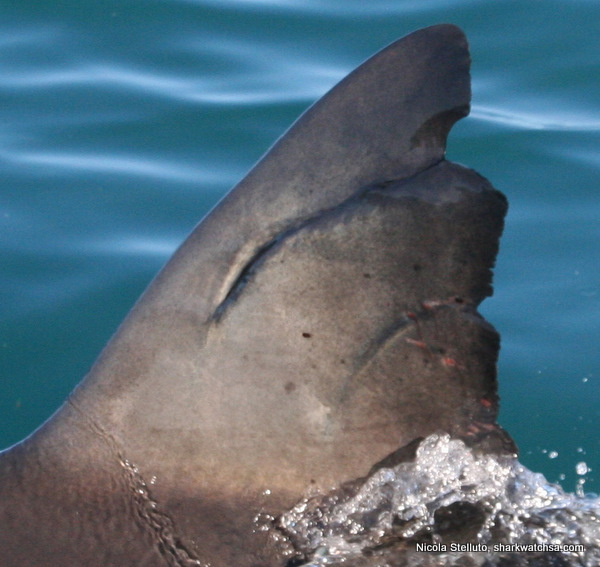
Shark LEGEND, Slashfin, has a very notable fin. These markings were most probably caused by another shark biting at his fin, which makes this extremely interesting as Slashfin is an adult male. But not all fins are so easy to distinguish…

This fin comes from Gansbaai resident, Mooney. This dorsal fin ID was taken of her in 2007… lets see what she looks like in 2009…
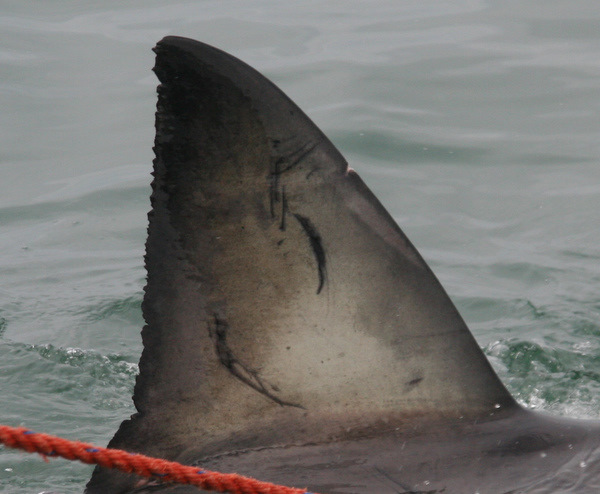
See the top notches? Yup, still Mooney. Even though she’s added some scars in the two years since the last photo, you can still identify her by the notches.

But not all body markings are created equally. This shark, spotted in 2011, has been wrapped up in fishing line which has created the dark circular scar running around the head of the shark. A great way to ID them, but we would rather stick to the doral fins than human caused damage like this…
If you have a white shark question that hasn’t been featured yet on the blog, email us by clicking here!